
why lavinia by ursula k. le guin feels so different to other greek myth retellings
a review of lavinia and its place in modern myth retellings

Lavinia is a novel that reimagines classical mythology through the perspective of a character who barely speaks in the original texts.
If you know the Aeneid, you’ve heard of Creusa, Priam’s daughter in Troy and Aeneas’ first wife. You remember Dido of Carthage. Maybe you remember the Volsci warrior Camilla… but do you remember Lavinia, the woman Aeneas ends up actually marrying at the end of Virgil’s Aeneid?
If you answered no, don’t stress. Neither did Virgil, and he was the literal author.
In this original epic, Lavinia is nothing more than a plot device: a beautiful, silent princess, offered up as a reward for Aeneas after his many trials. Her hair catches fire at one point (a divine omen), but she never speaks. Not once. Even when her hair catches fire. For a character whose marriage is supposed to found the Roman race, it’s strange silence.
But then, in 2008, Ursula K. Le Guin brought Lavinia to life.
In her novel Lavinia, Le Guin reimagines the princess as a narrator who is aware of her own mythic roots, living in a space between history and fiction. It’s dreamlike, philosophical, and extremely tender at times: a subtle reclaiming of a woman who had been left to fade into obscurity in the margins of someone else’s story.
In Virgil’s Aeneid, Lavinia is the daughter of King Latinus and Queen Amata, a princess of Latium whose main narrative function is to be married off. Her father receives a prophecy that she must wed a foreigner, and when the Trojan hero Aeneas arrives on Italian shores, he is deemed the divine match. A war breaks out over the engagement, largely because her mother prefers local bad-boy Turnus. Whether this is because she herself had a big fat crush on him or not, we may never know.
Lavinia says nothing about any of this, because she doesn’t say anything at all. Ever.
Her only other notable moment in the narrative is strikingly visual: her hair bursts into flame during a sacrificial ritual. This image is poetic, but also telling. She’s not allowed to speak, so her body becomes the message. She’s simply used as an omen.
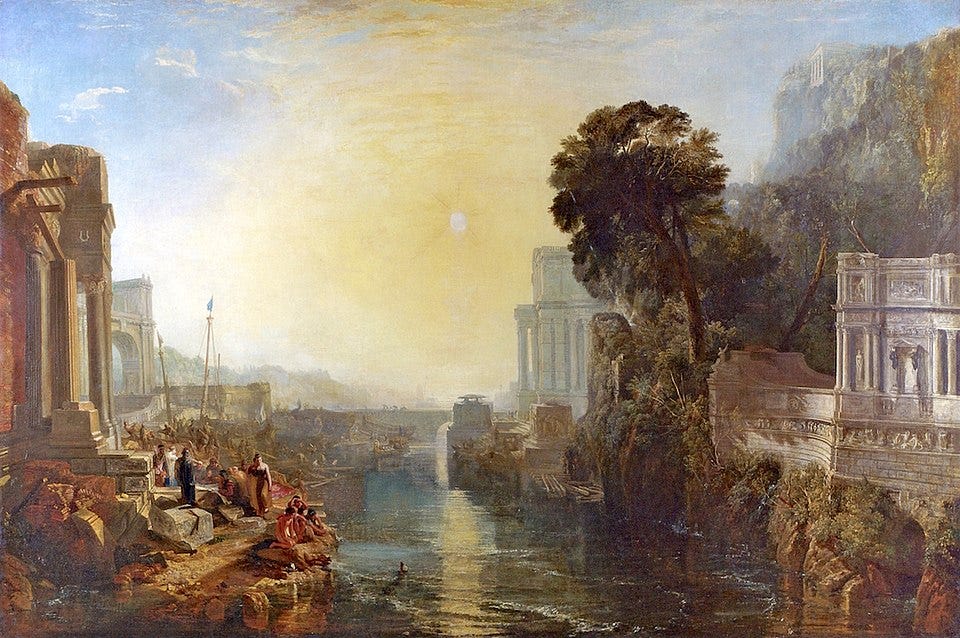
Lavinia is often remembered as the reward at the end of Aeneas’s journey, the domestic calm after the drama of Troy and Dido. She’s what he is awarded once he’s done grieving his past and fulfilling his destiny. But the irony is that in the Aeneid, Aeneas never even speaks to her. They don’t even share a conversation! The war ends, and then he marries her. The end, job done, thanks very much.
For a character who is the ‘mother of Rome,’ Lavinia barely registers. But as we well know, this isn’t unusual in epic literature. Women who are central to the plot are often the least developed. They are the stakes, rewards, or vessels for prophecy, but never actual people worth writing about.
Ursula K. Le Guin looked at this voiceless princess, this ‘mother of Rome’ who was never allowed a single word, and presumably thought, bit unrealistic, what would she really have been saying? With Lavinia, Le Guin performed a quiet miracle. She didn’t reinvent Lavinia into someone new, she simply listened and in doing so, created a version of Lavinia that feels eerily, profoundly real.
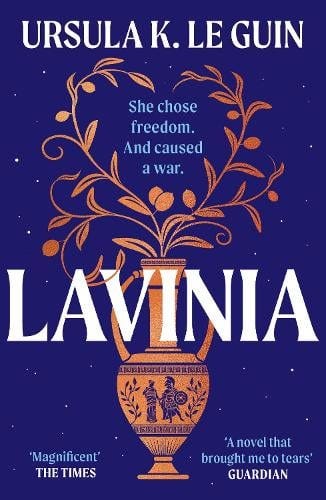
This Lavinia knows she’s a character from a poem. She speaks to the ghost of Virgil, who, in the novel, appears to her as a melancholy shade, unable to finish his epic because he is dying, hence why he is able to pass into Lavinia’s world. This meta-literary twist gives the book a creepy, dreamlike quality. Lavinia exists within the unknowable grey area between history and fiction, between myth and memory.
But she is grounded! She’s not a queen of marble, but a sharp-minded teenage girl with a spiritual connection to the forest and a quiet sense of duty. She questions the world around her and wonders about things such as love and fate and choice. She is aware that she is being shaped by a story that was never written with her in mind, and yet she refuses to be passive within it.
In Le Guin’s retelling, Lavinia becomes a study in female agency expressed not through rebellion or violence, but through dignity and thoughtfulness. She doesn’t rebel against her role in the poem, instead expanding and narrating it in her own voice. It’s a gentle, radical act. Where Virgil used her as a plot device, Le Guin gives her real life.
The novel is a quiet experiment: what happens when a woman is allowed to speak from within a story that silenced her? What does it mean to give voice to someone history barely remembered, not by reinventing her into a flashy, feminist heroine as so many retellings do, but by simply allowing her to be who she may realistically have been all along?
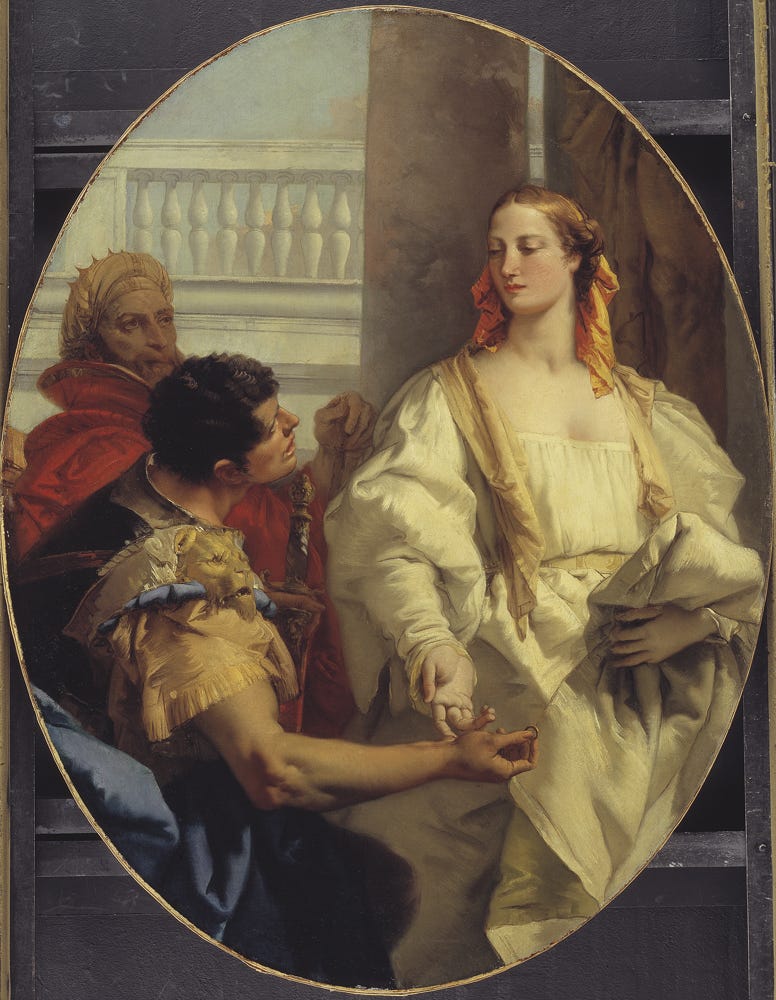
In a genre dominated by noisy men and even more noisy battles, Lavinia offers something much quieter but equally, if not more, powerful: the reminder that the forgotten women of epic had lives. That their silence was not nothing, it was erasure.
As I so often love to remind you all, hers is a troublingly familiar silence. Across myths, histories, and modern media, women are sidelined in the service of someone else’s story. They’re the Love Interest™. A motivation or a reward for the main man. We’re allowed to glimpse them in flashbacks, in prophecies, as mothers, but never explore them as whole people. Lavinia is the ultimate example: a woman who is supposedly foundational to an entire empire, but who never once speaks? Sure, Virgil, that sounds realistic.
Le Guin’s novel feels radical not because it turns Lavinia into something she wasn’t, but because it imagines her as someone she very probably could have been, someone so very human. It invites us to consider the hundreds of thousands of women throughout history and literature who have been left voiceless, and that reclaiming these voices doesn’t have to always be about explosive drama and revenge.
I read Lavinia a few weeks ago and I haven’t stopped thinking about it since. It might be my favourite feminist retelling of a classical myth ever, and that’s saying something as I’ve read a fair few.
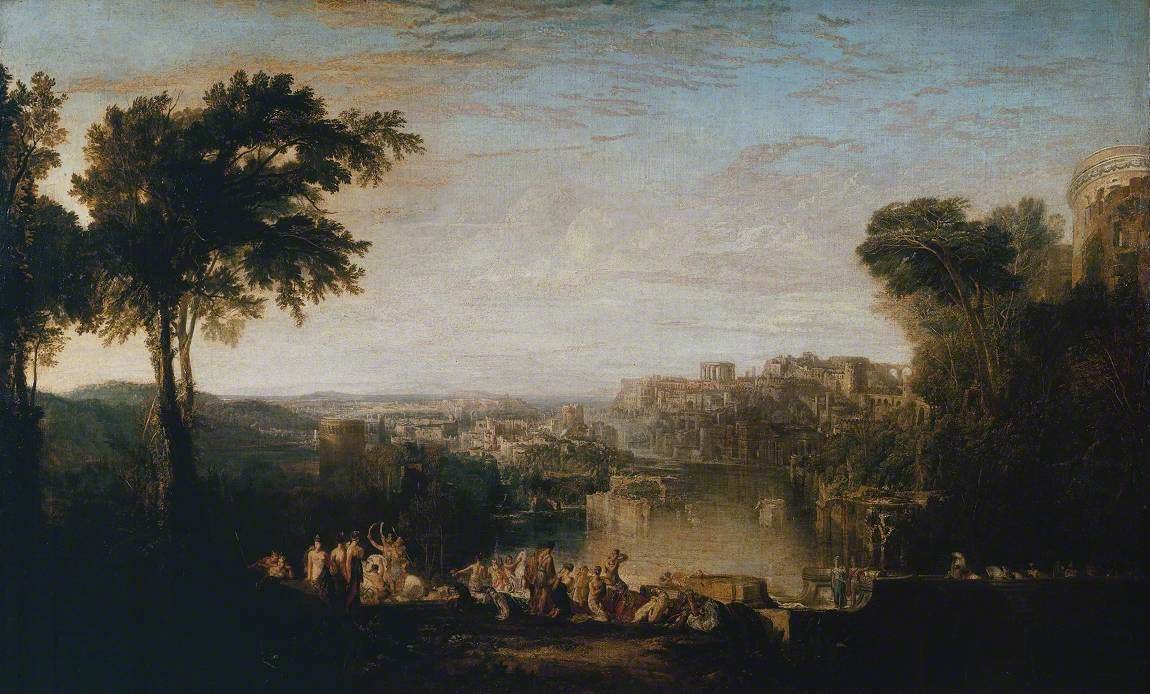
What struck me most wasn’t just how beautifully it was written (although it is), but how boldly weird and meta it is for a novel written in 2008, before feminist retellings were popular. Lavinia knows she’s a character in the Aeneid, she talks to her author and learns that her story isn’t fully hers. And she claims it anyway.
It creates this haunting, liminal atmosphere. Lavinia exists in this forgotten between, but to her it’s just home, as real as our own homes and towns are to us. The world she lives in is vivid and earthy, full of sacred groves, rituals and political tensions, and yet it always feels a little dreamlike, as if it’s all being half-remembered.
I was absolutely all over it.
Before all the modern feminist mythology retellings filled the bestseller tables, Lavinia was doing something quieter, stranger, and in many ways deeper. It doesn’t scream feminism, it just whispers it. It lets a voiceless woman take the reins, not with vengeance and violence, but with real awareness and thought. I could just tell how much thought had gone into this story. Le Guin saw this small hole in the narrative, did a little digging and found a gaping Lavinia-shaped chasm, and filled it with breathtakingly realistic life.
If you haven’t read it yet, I cannot recommend it enough. It’s a bit unsettling in the best way and just so gorgeous. Trust me guys. I have a writing degree, and Ursula is a legend.
Other retellings I’ve read which felt as thoughtful, subtly feminist and had awesome prose include:
Circe, Madeline Miller
Clytemnestra, Costanza Casati
The Silence of the Girls, Pat Barker
The Penelopiad, Margaret Atwood
Hera, Jennifer Saint
And of course, The Wolf Den trilogy by Elodie Harper. I just finished reading an ARC of her upcoming book Boudicca’s Daughter and I’m yet to recover. I may do a post about it soon!
That’s it from me today, I hope you enjoyed this take on a much lesser known character than the ones I usually write about. Lavinia is worth knowing about!
*✧・゚: *✧・゚:*✧・゚: *✧・゚:
Hi, I’m Ellie! This is Ancient Echoes, where I write fun feminist retellings of Greek mythology (and the occasional essay), exploring the lives of women in classical myth and how modern authors bring them to life. 🏺 Subscribe below for more like this !
ei!! thats my name too
Been an Ursula fan since the original Earthsea trilogy when I was a kid, decades now. Have re-read many of her books but had somehow missed this & just read it yesterday. She is a treasure